
In 1989, Japan’s automotive leaders reached an unprecedented consensus. In 2004, Honda publicly broke it.
But in the 15 years between those two dates, Toyota, Nissan, Honda, Mazda, Mitsubishi, and Subaru accidentally created the greatest era of performance cars the world has ever seen.

Last week, we shared a post on our feed about the “Gentlemen’s Agreement,” and the comments section exploded. It seems we aren’t the only ones obsessed with the fact that the Nissan Skyline GT-R, Mazda RX-7, and Mitsubishi Lancer Evolution, cars with vastly different displacements and architectures, all claimed to make exactly the same power: 280 PS (approx. 276 hp).
We recently traveled to Nagakute, Japan, for a private tour of the Toyota Automobile Museum. While researching the industry timeline for that trip, the story of this specific era stood out. It wasn’t just a rule. It was a clever engineering workaround.
For a decade and a half, Japan’s engineers adhered to a strict voluntary cap on advertised performance. But to maintain competitiveness on the global stage, they couldn’t stop developing powerful engines. Instead, they built engines with race-proven architecture, installed simple physical or electronic limiters to pass domestic inspection, and sold cars that were vastly “over-engineered” for their rated output.
Here is the story of how they navigated the restrictions.
The “Traffic War”

Source: National Police Agency via NILIM/MLIT
To understand the agreement, you have to understand the pressure behind it.
During the late 1980s, Japan experienced a renewed upward trend in road fatalities after the postwar peak of 16,765 deaths in 1970. The economic boom of the “Bubble Era” brought more powerful cars and more drivers to the road, renewing concerns about public safety.
Facing political pressure and the prospect of stricter regulation, major Japanese automakers adopted a voluntary “gentlemen’s agreement” around 1988–1989. The goal was to cap advertised power at roughly 280 PS and to limit published top speeds to 180 km/h.
The pact was informal. Manufacturers typically complied by understating brochure figures or fitting speed limiters on domestic performance models, rather than following a universal legal mandate.
The Dilemma: Homologation
The agreement created a strange split personality inside Japan’s engineering departments. On one desk sat the sales teams, nodding to a voluntary cap on advertised power; on the other, the race engineers were sharpening their pencils for Group A and WRC war. Motorsport doesn’t respect brochure numbers, race cars needed far more power and far tougher internals than a showroom spec sheet suggested. Homologation made that impossible to paper over: to race, you had to sell a road car with the same basic engine architecture.
You couldn’t quietly build a fragile street block and a bulletproof race block and call them different engines, the rules demanded lineage.
The solution was clever and costly: build the road car on a race‑capable architecture, understate its figures, and, where necessary, fit limiters for the street. The result was the golden age of homologation specials, the GT‑R, Evo and WRX families, cars born because the rulebook forced manufacturers to make their race hardware street‑legal
The Forensics: Architecture vs. Output
If you tear down a JDM legend today, you can find the physical evidence of this strategy. The “limiters” were often external, leaving the core engine unrestricted in its potential.
1. The Iron Heart (Mitsubishi 4G63)
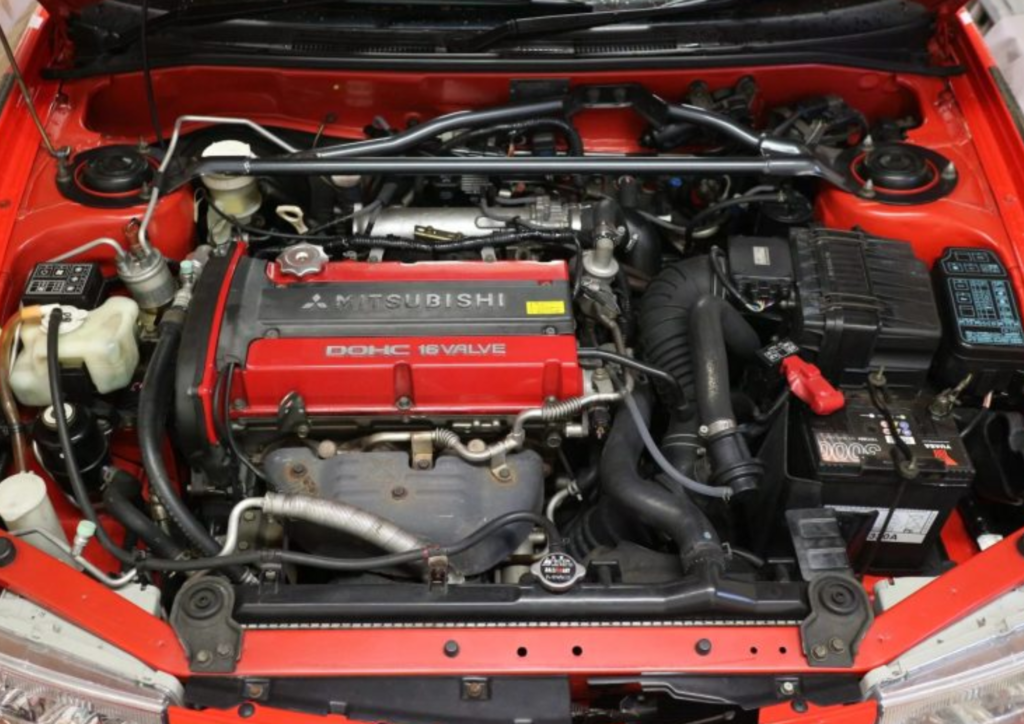
When Mitsubishi built the Lancer Evolution, they needed a platform that could win WRC titles. This required an engine block capable of withstanding massive boost pressures.
(Note: For those new to the terminology, JDM (Japanese Domestic Market) refers to vehicles and components manufactured specifically for sale within Japan. Because of regulations like this agreement, JDM vehicles often feature unique engine factory tunes, gearing, and options distinct from the export models sold in the US or Europe.)
The 4G63’s cast‑iron block was engineered with conservative margins, thick cylinder walls and robust deck/head interfaces, giving the platform exceptional resistance to distortion under sustained boost; however, many road‑going examples used production‑grade pistons and rods as a cost compromise, while higher‑spec Evolution variants shipped with stronger internals.
The Result: You bought a car rated for 276 hp, but you received a foundation structurally capable of handling significantly more. This Factor of Safety (FoS) is why the 4G63 remains a benchmark for tuning potential decades later, as detailed in this MotoIQ engineering teardown.
2. The Brass Restrictor (Nissan RB26)
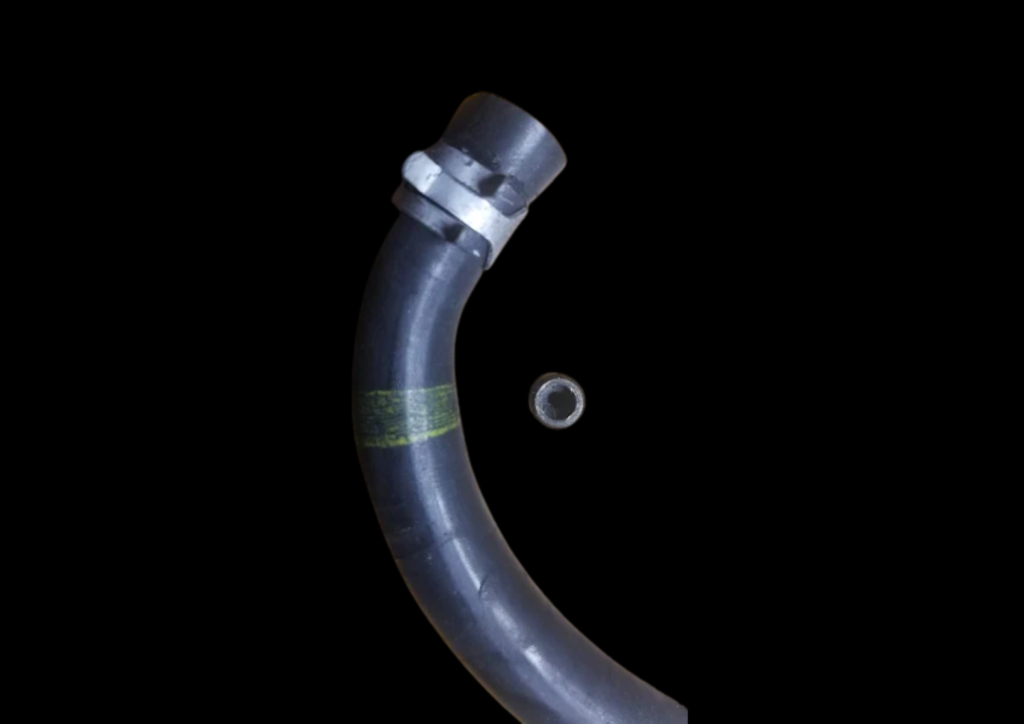
The Nissan Skyline GT‑R used a clever bit of plumbing to hide its true potential. To keep the twin‑turbo RB26DETT within the agreed power limit, Nissan didn’t cripple the hardware; they managed the boost signal instead.
Inside the vacuum hose assembly that feeds the factory boost‑control solenoid sits a small restrictor “pill” that trims the pressure the wastegates see; that hose is often identified by a yellow paint band. For a deeper technical breakdown see “RB26 Boost Restrictor Explained” on GTRUSA Blog.
The mechanism: the restrictor calms the pressure signal to the wastegate actuators, keeping stock boost in a conservative range of about 0.7–0.8 bar (10–12 psi), as documented in community testing and technical write‑ups.
The unlock: enthusiasts discovered that removing this single piece often lets the turbos hold more boost, many cars jump toward ~0.9–1.0 bar (13–14 psi) on otherwise stock hardware, without ECU changes.
Caveat: this effect is best documented on R32/R33 RB26 plumbing; the R34 uses different plumbing/ECU strategies and results vary by car and condition. Removing the restrictor without proper fueling, ignition tuning, and knock monitoring increases the risk of detonation and mechanical damage
3. The “Torque Loophole”

While the gentlemen’s agreement capped advertised peak horsepower, it said nothing about how much torque you could make or where in the rev range you made it, the practical exploit Aran Ree flagged in our comments on Facebook.
The physics:
The loophole: engineers kept the brochure peak at 280 PS while reshaping the torque curve, especially in the midrange, so cars felt dramatically quicker in everyday driving. By fattening torque at lower and mid RPMs they increased the area under the curve without changing the single peak horsepower number on the spec sheet.
The proof: published JDM specs reflect that evolution: the R32 GT‑R is commonly quoted near 353 Nm, while later R34 variants list roughly 392 Nm, yet both were advertised at the same peak. The result is a much stronger real‑world car, more usable force across the rev range, without technically breaking the agreement.
Quick caveats: figures vary by market, model year, and measurement standard; the R34’s advantage also came from turbo sizing, gearing, electronics, and chassis changes. Use this torque‑over‑hp explanation as the core reason for the era’s trickery, but note it was one of several engineering moves that made later models noticeably faster.
The Verdict: A Legacy of Potential

The voluntary JDM horsepower cap ended in October 2004; Honda’s announcement for the new Legend (Acura RL) publicly listed 221 kW (300 PS), signaling the return of openly published peak figures (Honda press release).
More important than the date is the engineering legacy: manufacturers met the cap by managing output (ECU maps, boost plumbing and limiters) rather than weakening core hardware, so many production platforms were built with higher mechanical margins, stronger blocks, reinforced drivetrains and conservative calibrations.
That over‑engineering created cars that were safer to tune, quicker in everyday driving (wider torque bands and better drivability), and fertile ground for a global aftermarket and motorsport success.
In short: the cap’s removal restored transparency, but the era left behind durable platforms whose real‑world potential still defines JDM culture today.
Exclusive: Inside the Toyota Archives
We are currently compiling our exclusive notes from Nagakute, where we documented the untold development story of the Prius, the engineering secrets of the Toyota 2000GT, and the very first Model AA.

Subscribe to the Engineering Community Newsletter so you don’t miss the full “Inside Toyota” feature dropping next week.